The Secret to Great Storytelling, 7 Techniques That Keep People Hooked
Why Some Stories Hook You in 10 Seconds (And Others Lose You Immediately)
We’ve all experienced it, when someone starts telling a story and suddenly you’re locked in. You stop scrolling, forget your coffee and you need to know what happens next.
And then there are the other stories—the ones that start with “So basically…” and somehow your brain teleports into another universe after the first sentence.
So what’s the difference?
It’s not about being naturally charismatic or having the most exciting life. Great storytelling is a skill—and like any skill, it follows patterns.
Once you understand those patterns, you can use them everywhere:
- in conversations
- in presentations
- in job interviews
- in content writing
even when you’re explaining why you were late.
Let me show you the 7 storytelling techniques that turn ordinary moments into stories people actually remember.
A Quick Mini-Story (To Prove This Works)
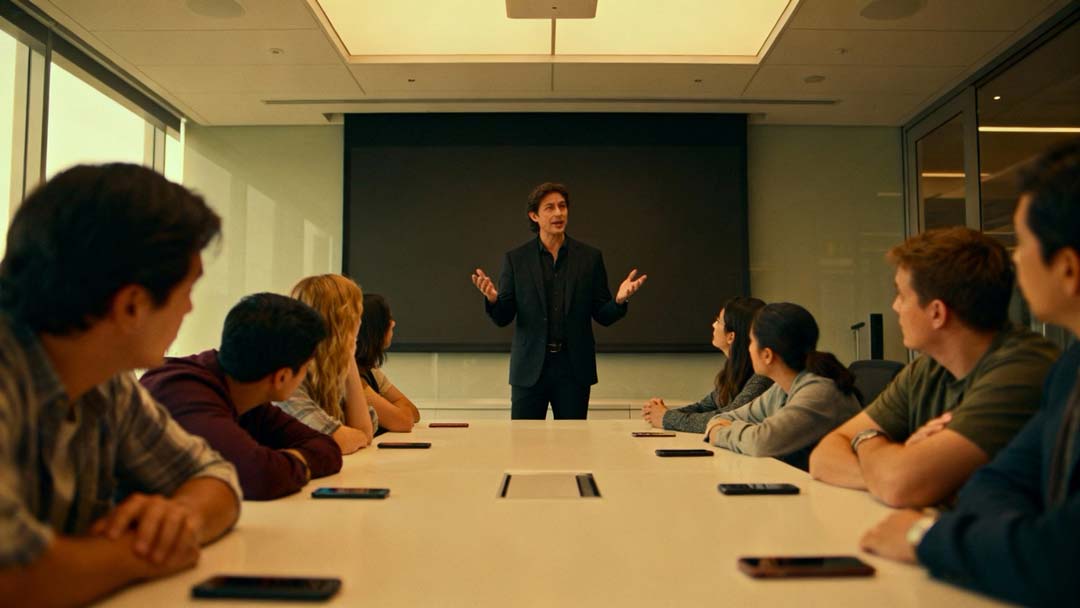
A few months ago, I had to speak in a meeting with senior leaders.
I prepared all the “right” things: background, context, numbers, and a clean summary.
I started with:
“Today I’m going to walk you through the project update…”
Within 20 seconds, I saw it: blank faces. Someone glanced at their laptop. Another person started typing.
So I stopped and restarted with one line:
“Two days ago, we realized the project could fail—and nobody saw it coming.”
The room changed instantly.
People looked up. Someone leaned forward. Questions started coming in.
Same topic. Same project. Different storytelling. That’s what these principles do.
7 Storytelling Techniques to Make Any Story More Engaging
1) Start With Tension (Not Background Information)
Most people begin stories with setup:
“So I had this job, and it was going fine…”
But attention doesn’t come from context. It comes from tension.
Start with a problem, conflict, or something unresolved—because the human brain is wired to notice gaps.
Try this instead:
❌ “I had a great job with good benefits.”
✅ “Everything looked perfect on paper. But inside, I knew something was breaking.”
That second version creates curiosity. It makes people think: What happened? Why? What did you do?
Quick tip: If your first sentence doesn’t create a question in the reader’s mind, rewrite it.
2) Use Vulnerability to Make Your Story Human
Perfect stories are forgettable. The stories that stick are the ones that feel real—because they include uncertainty, mistakes, fear, or doubt.
People don’t connect with your success as much as they connect with the moment you almost didn’t make it.
Example:
❌ “I successfully led my team through a challenging situation.”
✅ “I didn’t have the answer. And for the first time, I admitted it to my team.”
That’s human. That’s relatable.
Ask yourself: What part of this story makes you slightly uncomfortable to share?
That’s usually the part people will remember.
3) Show, Don’t Tell (Use Visual Details)
Here’s a quick test. Which line feels more vivid?
A) “The meeting was awkward.”
B) “The room went quiet. Everyone avoided eye contact. That’s when I knew the decision was wrong.”
Option B wins because it creates an image.
Your brain can see it.
Instead of describing emotions as labels (awkward, stressful, exciting), describe what people would notice:
- silence
- body language
- tone of voice
- small details that signal tension
Rule: If someone could film your story like a scene, you’re doing it right.
4) Make It About the Audience (Not Just About You)
This is one of the most powerful storytelling techniques—and the most overlooked.
A great story isn’t just about what happened to you. It’s a mirror for the listener.
Instead of:
“I learned so much from that experience.”
Try:
“If you’ve ever felt stuck in a role that looks great from the outside, this will sound familiar.”
That instantly pulls the reader in because they feel included.
Quick prompt: Who is this story for? What are they struggling with right now?
Write one sentence that makes them feel seen.
5) Raise the Stakes (Show What Could Be Lost)
People are more motivated by what they might lose than what they might gain. That’s not just opinion—it’s psychology. It’s called loss aversion, and it’s one of the strongest attention triggers.
Instead of saying:
“Taking action was the best decision I ever made.”
Try:
“Doing nothing felt safe… until I realized it was the most expensive choice.”
That hits harder because it shows the risk.
Ask yourself: What was at stake in your story?
- reputation
- trust
- time
- relationships
- money
- confidence
a once-in-a-lifetime opportunity
Highlight it.
6) Close the Loop (Bring It Back to the Beginning)
A satisfying story doesn’t just stop. It lands. The best way to do that is to return to your opening tension—but with a shift. This is called a narrative loop.
Example:
“That fear I mentioned at the start? It never disappeared. But it stopped controlling me.”
It creates emotional completion and makes your story feel meaningful.
Simple formula:
Start with a problem → show the struggle → end with change (even a small one).
7) End With a Decision (Not a Moral Lesson)
People forget advice. But they remember choices. Don’t end your story with a neat “lesson learned.” Instead, end with a decision point that forces the audience to reflect.
Instead of:
“And that’s why you should always trust your instincts.”
Try:
“So the real question isn’t what I did. It’s what you’ll do next time.”
That turns your story into a moment of transformation.
Pro tip: Great endings don’t explain everything. They leave the reader thinking.
Quick Summary: The 7 Best Storytelling Techniques
If you want people to stay hooked, remember this checklist:
✅ Start with tension
✅ Be human (show vulnerability)
✅ Use images and sensory details
✅ Make it about your audience
✅ Raise the stakes
✅ Close the loop
✅ End with a decision
How to Use These Storytelling Tips in Real Life (Fast)
You don’t need to use all seven at once. In fact, the easiest way to improve immediately is to pick just two:
Presentations
- Start with tension
- Show the stakes
Interviews
- Make it human
- Close the loop
Casual conversations
- Speak in images
- End with a decision
Even one small change can make your story instantly more engaging.
Final Thought:
Great Storytelling Isn’t Talent—It’s Structure. You don’t need extraordinary experiences to be a great storyteller. You just need to tell ordinary experiences in an extraordinary way.
So here’s the real decision: Which storytelling technique will you try first?