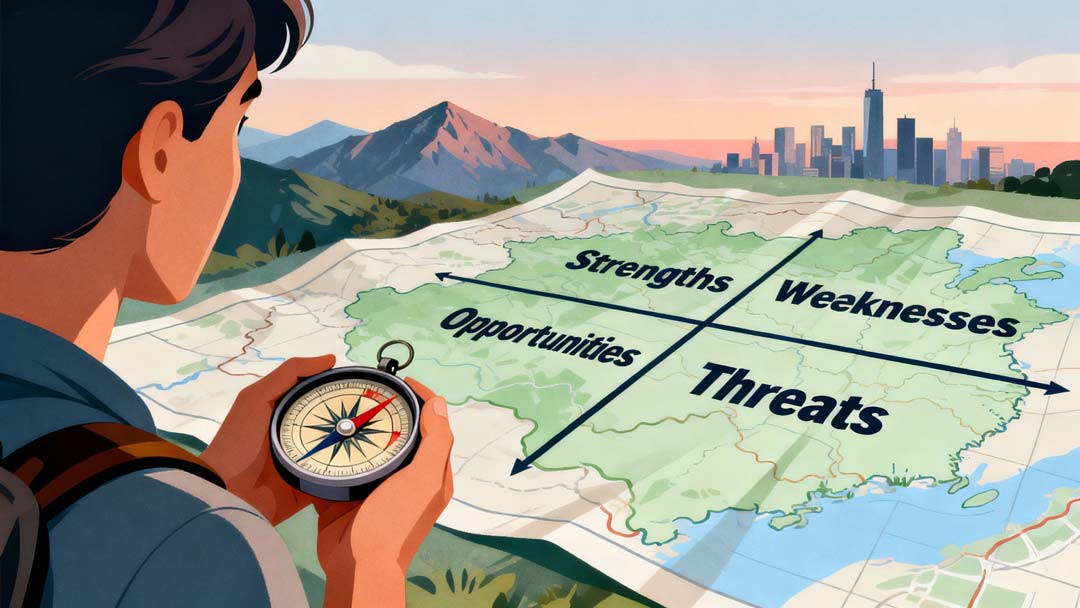
SWOT Analysis for Your Personal Life
We usually hear about SWOT analysis in business meetings or corporate strategy sessions. It’s the classic tool companies use to understand their competitive position and make smarter decisions. But here’s the truth: you don’t need to be a CEO to use SWOT.
A personal SWOT analysis can be a powerful way to reflect on your habits, mindset, and goals—so you can stop guessing and start growing. Think of it as a status check for your soul and your schedule.
Quick note:
- Strengths & Weaknesses = internal factors (from within you)
- Opportunities & Threats = external factors (from your environment)
Here’s how to do a DIY SWOT analysis for your personal life.
1. Strengths: What’s Your Superpower?
Start with the good stuff. Strengths are the internal skills, habits, and qualities you already have—and can lean on more often.
Ask yourself:
- What skills do people often ask me for help with?
- What am I naturally good at (communication, empathy, organization, leadership)?
- What wins or achievements am I proud of from the last year?
- What positive habits do I consistently maintain?
Examples of strengths:
- fast learner
- strong communication
- disciplined and consistent
- emotionally intelligent
- great problem-solving skills
Knowing your strengths isn’t arrogance—it’s clarity. You can’t build a better life if you don’t know what tools you already have.
2. Weaknesses: Where Do You Feel the Most Friction?
Everyone has blind spots. Weaknesses are internal habits or patterns that slow you down, hold you back, or make progress harder than it needs to be. Be honest, but don’t be harsh.
Ask yourself:
- Do I struggle with procrastination?
- Do I people-please and avoid setting boundaries?
- What skill am I missing for my dream job or goal?
- What makes me inconsistent when I’m trying to improve?
Examples of weaknesses:
- easily distracted
- overthinking
- low confidence
- poor time management
- lack of healthy routines
Identifying a weakness isn’t failure—it’s the first step toward improvement.
3. Opportunities: What Doors Are Open Around You?
If strengths and weaknesses come from within, opportunities come from the outside world. These are external factors you can use to grow faster or move forward more easily.
Ask yourself:
- Is there a course, certification, or training that could boost my career?
- Are there networking events, communities, or mentors I can connect with?
- Are there job openings, projects, or side hustles aligned with my goals?
- Are there lifestyle upgrades available (a new gym, better tools, supportive environment)?
Opportunities are like open doors—sometimes the hardest part is simply noticing them.
4. Threats: What Could Get in Your Way?
Threats are external obstacles that could disrupt your plans. You can’t control everything, but you can prepare.
Ask yourself:
- Is the rising cost of living affecting my savings and stability?
- Are toxic friendships or environments draining my energy?
- Is my industry changing so fast that my skills might become outdated?
- Are distractions (social media, bad habits, constant stress) reducing my focus?
- Threats aren’t meant to scare you—they’re meant to help you stay ready.
A Quick Example of a Personal SWOT Analysis
Let’s say your goal is career growth:
Strengths
- fast learner and adaptable
- good communication skills
- decent portfolio and experience
Weaknesses
- procrastinate when tasks feel overwhelming
- low confidence in interviews
- missing a specific technical skill
Opportunities
- affordable online courses and free resources
- professional communities and networking events
- growing demand in your field
Threats
- stronger competition in the job market
- fast-changing industry trends
- increasing financial pressure
Now you’re not just “hoping” things get better—you have a clear map of what’s happening.
Putting It All Together: Turn Your SWOT Into a Strategy
This is where the real magic happens. Don’t stop at writing a list—connect the dots and turn it into action using these simple strategies:
SO Strategy (Strength → Opportunity)
Use your strengths to take advantage of opportunities.
Example: You are a good communicator → you should often attend networking events and build relationships.
WO Strategy (Weakness → Opportunity)
Improve weaknesses so you can access more opportunities.
Example:
You lack a technical skill → commit to a 30-day course + practice with real projects.
ST Strategy (Strength → Threat)
Use your strengths to reduce the impact of threats.
Example:
You learn fast → stay updated so your skills don’t become outdated.
WT Strategy (Weakness → Threat)
Minimize weaknesses to avoid bigger risks.
Example: You’re easily distracted → set screen-time limits to protect your productivity.
Final Thoughts
Conducting a personal SWOT analysis once or twice a year helps you stay focused and non-reactive. This analysis can provide clarity on what needs strengthening, what needs improvement, what needs work, and what needs preparation.
Building a better life isn’t about perfection. It’s about having a clear direction.[CA]